A doctoral thesis about the Central party and the Church politics in Finland will be defended at the University of Helsinki 10th of April.
The main statement will be that in the 1970’s the Central party of Finland increased its role in the Church politics. Along to the thesis Central party was afraid that it would lose members -- especially those belonging to Lutheran revival movements -- to other parties. The biggest threat was the Finnish Christian League, and this why the Central party started to emphasize Christian values and take bigger role in the Church politics.
The link between these two -- Conservative Laestadianism and the Central party of Finland -- is not a secret, but I’m sure this thesis will give us some new information and new ideas.
We still have to wait for the book, but before that you can read the summary and get the details here.
-Mari
Showing posts with label secularism. Show all posts
Showing posts with label secularism. Show all posts

Archbishop election
The first round of archbishop election in Finnish Lutheran Church will take place today and the issue that has mostly been dividing the candidates has been same sex marriage and whether church weddings should be allowed for heterosexual couples.
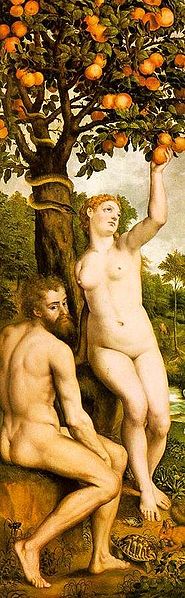
Yesterdays Conservative Laestadian newspaper Päivämies (17.2.2010) also dealt this topic in its editorial. In it homosexuality was seen as a temptation which we should resist. However his resistance has lately become harder and harder as a result of our high living standards – humanity is a threat to the Word of God. As Eve came to conclusion that it’s ok to eat the apple we have after all this discussing come to conclusion that homosexuality is not against Gods will.
The editorial states that the future leader of the Lutheran Church in Finland should boldly stick what the Bible says even though this would leave him alone. This how our “common church” would have a solid foundation and we would avoid the disintegration that is often considered a threat to the Lutheran Church.
This discussion is of course a part of a bigger discourse which has been taking place in other countries too and in the end I’m sure you can find grounds for both views from the Bible.
-Mari
Yesterdays Conservative Laestadian newspaper Päivämies (17.2.2010) also dealt this topic in its editorial. In it homosexuality was seen as a temptation which we should resist. However his resistance has lately become harder and harder as a result of our high living standards – humanity is a threat to the Word of God. As Eve came to conclusion that it’s ok to eat the apple we have after all this discussing come to conclusion that homosexuality is not against Gods will.
The editorial states that the future leader of the Lutheran Church in Finland should boldly stick what the Bible says even though this would leave him alone. This how our “common church” would have a solid foundation and we would avoid the disintegration that is often considered a threat to the Lutheran Church.
This discussion is of course a part of a bigger discourse which has been taking place in other countries too and in the end I’m sure you can find grounds for both views from the Bible.
-Mari
Is environmentalism a religion?
The Philosopher's Eye asks a topical question: Is environmentalism a religion?:
I don't have a take on this, really. What I find interesting, though, is that whenever you come across this identification -- i.e. environmentalism-is-a-religion -- it is made by the anti-environmentalist without exception. What I am thinking now is
Mika
Every so often popular debate breaks out about whether belief in anthropogenic global warming is analogous to religious belief. These debates almost always turn into debates about whether environmentalism is a religion. Typically, one side maintains that the distinctive feature of religious belief is that it appeals to the supernatural, and so environmentalism isn’t a religion. The other side maintains that the distinctive feature of religious belief is the passion with which the belief is held, and so environmentalism, when it’s held passionately, is a religion.

I don't have a take on this, really. What I find interesting, though, is that whenever you come across this identification -- i.e. environmentalism-is-a-religion -- it is made by the anti-environmentalist without exception. What I am thinking now is
1. What does this tell about the role of religion in contemporary environmental discourse? Is it that anyone passionate about the fate of our planet is a fundamentalist driven by irrationalism?
2. Is there a coherent Christian view about (or within) the politics of environmentalism? I'd love to get an idea of the playing field here, so let me know of anything in the comments.
(Via The Philosopher's Eye.)
Mika
IRNRD
Dear Colleagues,
Let me shortly inform you about the activities and some of the plans of the IRNRD (International Research Network on Religion and Democracy): an inter-disciplinary research group of international scholars.
The first steps were made in 2008, when we organized a conference with the title Religion and Democracy: Challenges and Prospects. Our second conference Political Theology for the 21st Century? Trends and Tasks was held in December 2009, where Mika -- an active member of the IRNRD -- gave a presentation on Laestadianism and the project Laestadian-ism: Political Theology and Civil Religion (see Mika's related posts). Our next conference will be in Rome in December this year, a joint program at LUISS University and John Cabot University. The meeting is under organisation with the title Between Rawls and Religion. In cooperation with the Laestedianism project, we plan to organize our 2012 annual conference in Rovaniemi on Politics and Evil.
Members of the advisory board are renowned scholars like Neera Chandhoke, Maeve Cooke, Herman De Dijn, Sebastiano Maffettone, András Lánczi, Johannes van der Ven, while the members and cooperative partners include Aakash Singh, Tom Bailey, András Csepregi, Jianhong Chen, Michael Hoelzl, Patrick Loobuyck, Theo de Wit, William Desmond, John Rundell, Walter van Herck, Peter Jonkers, and Matthias Riedl.
Forthcoming publications of the network: From Political Theory to Political Theology (eds. Péter Losonczi and Aakash Singh, Continuum, 2010) and we are about submitting another piece at LIT Verlag on Habermas' postsecular turn.
We have started working on further pieces based on the presentations of the 2009 conference and additional texts. Mika will be co-editor of a book with theological studies.
We intend to submit applications regarding financing on national and international level and intensify the cooperation in the most diverse forms possible. If you get interested in this initiative do not hesitate and contact me at lospeter at the domain yahoo dot com.
Péter Losonczi
Let me shortly inform you about the activities and some of the plans of the IRNRD (International Research Network on Religion and Democracy): an inter-disciplinary research group of international scholars.
The first steps were made in 2008, when we organized a conference with the title Religion and Democracy: Challenges and Prospects. Our second conference Political Theology for the 21st Century? Trends and Tasks was held in December 2009, where Mika -- an active member of the IRNRD -- gave a presentation on Laestadianism and the project Laestadian-ism: Political Theology and Civil Religion (see Mika's related posts). Our next conference will be in Rome in December this year, a joint program at LUISS University and John Cabot University. The meeting is under organisation with the title Between Rawls and Religion. In cooperation with the Laestedianism project, we plan to organize our 2012 annual conference in Rovaniemi on Politics and Evil.
Members of the advisory board are renowned scholars like Neera Chandhoke, Maeve Cooke, Herman De Dijn, Sebastiano Maffettone, András Lánczi, Johannes van der Ven, while the members and cooperative partners include Aakash Singh, Tom Bailey, András Csepregi, Jianhong Chen, Michael Hoelzl, Patrick Loobuyck, Theo de Wit, William Desmond, John Rundell, Walter van Herck, Peter Jonkers, and Matthias Riedl.
Forthcoming publications of the network: From Political Theory to Political Theology (eds. Péter Losonczi and Aakash Singh, Continuum, 2010) and we are about submitting another piece at LIT Verlag on Habermas' postsecular turn.

We have started working on further pieces based on the presentations of the 2009 conference and additional texts. Mika will be co-editor of a book with theological studies.
We intend to submit applications regarding financing on national and international level and intensify the cooperation in the most diverse forms possible. If you get interested in this initiative do not hesitate and contact me at lospeter at the domain yahoo dot com.
Péter Losonczi
People: good or evil?
Dennis Praeger cuts into the heart of the matter of political theory by asking the perennial question: If You Believe People Are Basically Good or Evil?
According to Praeger no issue has a greater influence on determining your social and political views than whether you view human nature as basically good or not:
One of these forces is poverty, which explains evil by social deprivation. The fallacy of this explanation is, Praeger points out, that there are people who choose evil for reasons having nothing to do with their economic situation.
He goes on:
This is what religion teaches, at least the Christian religion does. Mankind is with Adam: we are, like St. Paul, "of the flesh, sold under sin" (Rom 7:14, ESV). If there is something wrong with the society, it is not the society: it is us. It is not the structure we must blame, but the agent.
Praeger continues with two more important points, but we already know where he is coming from. I have always admired the eloquence of the conservative genre: conservatives do not need to quote research or theories to make a point. An argument composed in layman's black/white, either/or, friend/enemy terms communicates more than social science ever could.
Where have I read Praeger's question before? In Carl Schmitt's The Concept of the Political, of course:
A theologian ceases to be a theologian, Schmitt argues, when he no longer considers man to be a sinner in need of redemption, no longer distinguishes between the chosen and unchosen. When you first entertain the thought that people can be good, you will soon believe that you yourself are good. Those who disagree with your assessment -- and there will always be someone -- are not merely wrong, but likely to be on the evil's side. Theology works as a bulwark against moral relativism: a stand on God's good against the ideas and ideologies of men.
Praeger finishes off by demolishing the ideological foundations of "secular humanistic culture":
In other words: political society needs God on its side. Where have I read this before? Joseph de Maistre is about as pessimistic when it comes to the faculties of man in taking care of its political institutions. Considerations on France is an attack on Rousseau -- "perhaps the most self-deceived man who ever lived" -- and the revolution he helped inspire. De Maistre abhorred the idea of state apart from the divine:
Though I agree with Praeger when it comes to his (and Schmitt's) anthropological assessment, I find it difficult to bring it into our political context. Both de Maistre and Praeger write in their own political contexts -- Joseph against revolutionary humanism and Dennis against American liberalism -- and their conclusions have little to contribute to, say, Finland in the current political moment. What (or who) is evil in Finnish society? Is God on Finland's side, and if indeed he is, who are the Finns exactly? If not on "our" side, whose side is God on?
(Via Apologetic Junkie.)
Mika
According to Praeger no issue has a greater influence on determining your social and political views than whether you view human nature as basically good or not:
I believe that we are born with tendencies toward both good and evil. Yes, babies are born innocent, but not good. Why is this issue so important? First, if you believe people are born good, you will attribute evil to forces outside the individual.
One of these forces is poverty, which explains evil by social deprivation. The fallacy of this explanation is, Praeger points out, that there are people who choose evil for reasons having nothing to do with their economic situation.
He goes on:
Second, if you believe people are born good, you will not stress character development when you raise children. [...] You will teach them how to struggle against the evils of society -- its sexism, its racism, its classism and its homophobia. But you will not teach them that the primary struggle they have to wage to make a better world is against their own nature.
This is what religion teaches, at least the Christian religion does. Mankind is with Adam: we are, like St. Paul, "of the flesh, sold under sin" (Rom 7:14, ESV). If there is something wrong with the society, it is not the society: it is us. It is not the structure we must blame, but the agent.
Praeger continues with two more important points, but we already know where he is coming from. I have always admired the eloquence of the conservative genre: conservatives do not need to quote research or theories to make a point. An argument composed in layman's black/white, either/or, friend/enemy terms communicates more than social science ever could.
Where have I read Praeger's question before? In Carl Schmitt's The Concept of the Political, of course:
One could test all theories of state and political ideas according to their anthropology and thereby classify these as to whether they consciously or unconsciously presuppose man to be by nature evil or by nature good. [...] The problematic or unproblematic conception of man is decisive for the presupposition of every further political consideration, the answer to the question whether man is a dangerous being or not, a risky or harmless creature. (58.)
A theologian ceases to be a theologian, Schmitt argues, when he no longer considers man to be a sinner in need of redemption, no longer distinguishes between the chosen and unchosen. When you first entertain the thought that people can be good, you will soon believe that you yourself are good. Those who disagree with your assessment -- and there will always be someone -- are not merely wrong, but likely to be on the evil's side. Theology works as a bulwark against moral relativism: a stand on God's good against the ideas and ideologies of men.
Praeger finishes off by demolishing the ideological foundations of "secular humanistic culture":
No great body of wisdom, East or West, ever posited that people were basically good. This naive and dangerous notion originated in modern secular Western thought, probably with Jean Jacques Rousseau, the Frenchman who gave us the notion of pre-modern man as a noble savage. He was half right. Savage, yes, noble, no. If the West does not soon reject Rousseau and humanism and begin to recognize evil, judge it and confront it, it will find itself incapable of fighting savages who are not noble.
In other words: political society needs God on its side. Where have I read this before? Joseph de Maistre is about as pessimistic when it comes to the faculties of man in taking care of its political institutions. Considerations on France is an attack on Rousseau -- "perhaps the most self-deceived man who ever lived" -- and the revolution he helped inspire. De Maistre abhorred the idea of state apart from the divine:
It would be curious to examine our European institutions one by one and to show how they are all Christianized, how religion mingles in everything, animates and sustains everything. Human passions may pollute and even pervert primitive creations, but if the principle is divine, this is enough to give them a prodigious permanence. (42.)
Though I agree with Praeger when it comes to his (and Schmitt's) anthropological assessment, I find it difficult to bring it into our political context. Both de Maistre and Praeger write in their own political contexts -- Joseph against revolutionary humanism and Dennis against American liberalism -- and their conclusions have little to contribute to, say, Finland in the current political moment. What (or who) is evil in Finnish society? Is God on Finland's side, and if indeed he is, who are the Finns exactly? If not on "our" side, whose side is God on?
(Via Apologetic Junkie.)
Mika
Religious views in the secular sphere
There is an interesting article and an entertaining discussion ongoing at Cif belief, The Guardian's opinion site on religious issues. The piece is an article by Jonathan Chaplin that criticises the view held by some secular humanists according to which religion should play no role whatsoever in democratic discourse. Chaplin's point is that the democratic debate should take in as many faith-based and moral views as possible.
Chaplin makes his case against secular humanism by debunking the three main points made against religion in the public square:
- Faith-based discourse will cause religious views to be legally imposed on secular citizens.
- Faith-based arguments are unintelligible or inaccessible to most citizens, whereas secularist moral arguments can be embraced by everyone.
- Religious faith is just irrational and so can never be the basis of democratic reasoning.
According to Chaplin none of the three stand up. He concludes:
If we want a truly pluralistic democracy which builds consensus by honouring difference rather than suppressing it, we should ensure that democratic debate remains open to as many moral and faith-based standpoints as possible. In a pluralist democracy pretty much everyone at some point is going to feel imposed on by some legislated moral standpoint they deeply repudiate. So for exclusivists to single out just one class of moral standpoints – religious ones – as unacceptable cannot be justified.
I find Chaplin's argument very compelling and agreeable. What I find baffling is the hard time he gets from the commenters. Atheists can be a vicious lot sometimes. Only a handful of commenters who attack Chaplin seem to have read what he is actually saying. He is not saying that faith should be given more influence in public life than any other standpoint, but that it should not be denied influence merely on the grounds that it is faith-based, i.e. "non-rational" knowledge.
I'll leave the final word to the Gaping Void.
Mika
Subscribe to:
Posts (Atom)


 Posts
Posts

