At the end of my interesting and increasingly useful excursion to The United States I had a privilege of meeting an English pastor with whom I got a chance to speak (among other things) laestadianism. My friend was interested in charismatic Christianity and was on related trip to the US, visiting a church in Redding, CA.
Laestadianism has its roots firmly in the charismatic tradition, based as it is in the powerful person and preaching of Lars Levi Laestadius in 19th century Lapland. I am no expert in church history, but I do have some doubts about identifying the contemporary movement as charismatic. There are charismatic Christian sects in Finland, like the Nokia Revival, but in the practice of the laestadian religion there is little or no emphasis on spiritual gifts or godly manifestations.
Disagree? Let me know in the comments.
Mika
Showing posts with label finland. Show all posts
Showing posts with label finland. Show all posts

Päivämies day
Wednesday is the day when the Conservative Laestadian newspaper Päivämies comes out. Most of the topics dealt with aren’t very current; however, the editorial refers to some more topical issues and often gives me something to write about. This week the editorial referred to the service that has been a part of the opening to the parliamentary spring session.
Several times I have come across the metaphor of a nestling and an egg which has two shells; one of them representing the authority on earth and the other one the authority in heaven, both making sure that the egg is a safe place to grow. According to the editorial the earthly authority i.e. the state, has to take care that the children of God will make it safely to the kingdom of heaven. The editorial emphasizes that the state should be Christian and follow Christian values.
Seppo Lohi -- a visible person in the movement -- has once said that when proportioned to the size of the movement it has significant religious and social importance. No need to say, that these kinds of statements just underpin our research -- the relationship between the state and the Laestadian movement is quite an explicit one.
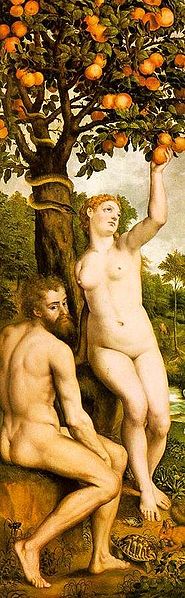
Another thing that I noticed whilst reading the paper, which I have come across several times lately is a statement which Conservative Laestadians tend to use when some issues are open to interpretation. In these cases it is common to use the part of the bible where the snake lures Eve to eat the apple – this is an example where too much thinking and pondering didn’t lead to a happy ending. I think that probably quite many people would say that this is just a way to “cover up” the statements or rules which don’t have any ground in the bible -- or at least not explicitly.
So these were the thoughts that I wanted to share with you.
I hope you all have a nice week!
-Mari
Several times I have come across the metaphor of a nestling and an egg which has two shells; one of them representing the authority on earth and the other one the authority in heaven, both making sure that the egg is a safe place to grow. According to the editorial the earthly authority i.e. the state, has to take care that the children of God will make it safely to the kingdom of heaven. The editorial emphasizes that the state should be Christian and follow Christian values.
Seppo Lohi -- a visible person in the movement -- has once said that when proportioned to the size of the movement it has significant religious and social importance. No need to say, that these kinds of statements just underpin our research -- the relationship between the state and the Laestadian movement is quite an explicit one.
Another thing that I noticed whilst reading the paper, which I have come across several times lately is a statement which Conservative Laestadians tend to use when some issues are open to interpretation. In these cases it is common to use the part of the bible where the snake lures Eve to eat the apple – this is an example where too much thinking and pondering didn’t lead to a happy ending. I think that probably quite many people would say that this is just a way to “cover up” the statements or rules which don’t have any ground in the bible -- or at least not explicitly.
So these were the thoughts that I wanted to share with you.
I hope you all have a nice week!
-Mari
Doctoral thesis about Finnish party politics and Laestadianism
A doctoral thesis about the Central party and the Church politics in Finland will be defended at the University of Helsinki 10th of April.
The main statement will be that in the 1970’s the Central party of Finland increased its role in the Church politics. Along to the thesis Central party was afraid that it would lose members -- especially those belonging to Lutheran revival movements -- to other parties. The biggest threat was the Finnish Christian League, and this why the Central party started to emphasize Christian values and take bigger role in the Church politics.
The link between these two -- Conservative Laestadianism and the Central party of Finland -- is not a secret, but I’m sure this thesis will give us some new information and new ideas.
We still have to wait for the book, but before that you can read the summary and get the details here.
-Mari
The main statement will be that in the 1970’s the Central party of Finland increased its role in the Church politics. Along to the thesis Central party was afraid that it would lose members -- especially those belonging to Lutheran revival movements -- to other parties. The biggest threat was the Finnish Christian League, and this why the Central party started to emphasize Christian values and take bigger role in the Church politics.
The link between these two -- Conservative Laestadianism and the Central party of Finland -- is not a secret, but I’m sure this thesis will give us some new information and new ideas.
We still have to wait for the book, but before that you can read the summary and get the details here.
-Mari
Laestadianism on YouTube
If you have extra ten minutes check the
LaestadianismInfo YouTube channel.
There you can find footage e.g. of Laestadian services and most of the videos are in English. It is also worthwhile to flick through the “Favourites” section!
My personal favourites are the videos about creationism and feminism (in Finnish).
-Mari
LaestadianismInfo YouTube channel.
There you can find footage e.g. of Laestadian services and most of the videos are in English. It is also worthwhile to flick through the “Favourites” section!
My personal favourites are the videos about creationism and feminism (in Finnish).
-Mari
Public figures and Laestadianism
The biggest daily newspaper in Finland, Helsingin Sanomat, is getting a new chief editor called Mikael Pentikäinen. Yesterdays Helsingin Sanomat dedicated a whole page article for this accompanied with a little profile about him.
The profile highlighted that Pentikäinen has been active in the Center party and he described to be a skilled professional, a ”news hawk”. The last chapter had something that caught my attention – Pentikäinen has a Laestadian background.
There are already several writings and discussions in the internet wondering if his religious background will influence the content of the paper and whether some topics will now get less/more attention. On the other hand there is as many writings stating that Pentikäinen is a professional and won't let his own beliefs influence the line of the newspaper.
Well what ever happens, it is still quite interesting to notice how much attention his religious background has gained.
Mari
The profile highlighted that Pentikäinen has been active in the Center party and he described to be a skilled professional, a ”news hawk”. The last chapter had something that caught my attention – Pentikäinen has a Laestadian background.
There are already several writings and discussions in the internet wondering if his religious background will influence the content of the paper and whether some topics will now get less/more attention. On the other hand there is as many writings stating that Pentikäinen is a professional and won't let his own beliefs influence the line of the newspaper.
Well what ever happens, it is still quite interesting to notice how much attention his religious background has gained.
Mari
Laestadians and Domestic Violence
The Federation of Mother and Child Homes and Shelters in Oulu and the Conservative Laestadians are starting cooperation. According to the article in religious newspaper Kotimaa (4.2.2010), domestic violence in Laestadian families isn’t any more common than in non-religious families, but the problem has been the cultural differences. The aim of this cooperation is to collect information about working with tight communities like Conservative Laestadians and how the special characteristics in their culture affect the helping process.
For example, among non-religious people divorce might often be the solution in domestic violence cases. In Conservative Laestadian movement it isn’t that easy – marriage is meant to last for the lifetime and divorce isn’t considered as a solution. Members of the religious movement have also said that in domestic violence cases it is important to keep the family together and keep up the facade of happy family life.
As the article notes, asking for forgiveness or making a confession are not necessarily enough - in most cases earthly help and counselling are needed. The writer referred to a Conservative Laestadians newspaper Päämies (27.1.2010) in which the editorial stated, that after asking for forgiveness from God person should know in his or her heart what is the right thing to do. In these cases the worst case scenario is that people go on as usual without getting any help or not trying to change.
More information (in Finnish):
Oulun ensi- ja turvakoti
Yle uutiset
For example, among non-religious people divorce might often be the solution in domestic violence cases. In Conservative Laestadian movement it isn’t that easy – marriage is meant to last for the lifetime and divorce isn’t considered as a solution. Members of the religious movement have also said that in domestic violence cases it is important to keep the family together and keep up the facade of happy family life.
As the article notes, asking for forgiveness or making a confession are not necessarily enough - in most cases earthly help and counselling are needed. The writer referred to a Conservative Laestadians newspaper Päämies (27.1.2010) in which the editorial stated, that after asking for forgiveness from God person should know in his or her heart what is the right thing to do. In these cases the worst case scenario is that people go on as usual without getting any help or not trying to change.
More information (in Finnish):
Oulun ensi- ja turvakoti
Yle uutiset
People: good or evil?
Dennis Praeger cuts into the heart of the matter of political theory by asking the perennial question: If You Believe People Are Basically Good or Evil?
According to Praeger no issue has a greater influence on determining your social and political views than whether you view human nature as basically good or not:
One of these forces is poverty, which explains evil by social deprivation. The fallacy of this explanation is, Praeger points out, that there are people who choose evil for reasons having nothing to do with their economic situation.
He goes on:
This is what religion teaches, at least the Christian religion does. Mankind is with Adam: we are, like St. Paul, "of the flesh, sold under sin" (Rom 7:14, ESV). If there is something wrong with the society, it is not the society: it is us. It is not the structure we must blame, but the agent.
Praeger continues with two more important points, but we already know where he is coming from. I have always admired the eloquence of the conservative genre: conservatives do not need to quote research or theories to make a point. An argument composed in layman's black/white, either/or, friend/enemy terms communicates more than social science ever could.
Where have I read Praeger's question before? In Carl Schmitt's The Concept of the Political, of course:
A theologian ceases to be a theologian, Schmitt argues, when he no longer considers man to be a sinner in need of redemption, no longer distinguishes between the chosen and unchosen. When you first entertain the thought that people can be good, you will soon believe that you yourself are good. Those who disagree with your assessment -- and there will always be someone -- are not merely wrong, but likely to be on the evil's side. Theology works as a bulwark against moral relativism: a stand on God's good against the ideas and ideologies of men.
Praeger finishes off by demolishing the ideological foundations of "secular humanistic culture":
In other words: political society needs God on its side. Where have I read this before? Joseph de Maistre is about as pessimistic when it comes to the faculties of man in taking care of its political institutions. Considerations on France is an attack on Rousseau -- "perhaps the most self-deceived man who ever lived" -- and the revolution he helped inspire. De Maistre abhorred the idea of state apart from the divine:
Though I agree with Praeger when it comes to his (and Schmitt's) anthropological assessment, I find it difficult to bring it into our political context. Both de Maistre and Praeger write in their own political contexts -- Joseph against revolutionary humanism and Dennis against American liberalism -- and their conclusions have little to contribute to, say, Finland in the current political moment. What (or who) is evil in Finnish society? Is God on Finland's side, and if indeed he is, who are the Finns exactly? If not on "our" side, whose side is God on?
(Via Apologetic Junkie.)
Mika
According to Praeger no issue has a greater influence on determining your social and political views than whether you view human nature as basically good or not:
I believe that we are born with tendencies toward both good and evil. Yes, babies are born innocent, but not good. Why is this issue so important? First, if you believe people are born good, you will attribute evil to forces outside the individual.
One of these forces is poverty, which explains evil by social deprivation. The fallacy of this explanation is, Praeger points out, that there are people who choose evil for reasons having nothing to do with their economic situation.
He goes on:
Second, if you believe people are born good, you will not stress character development when you raise children. [...] You will teach them how to struggle against the evils of society -- its sexism, its racism, its classism and its homophobia. But you will not teach them that the primary struggle they have to wage to make a better world is against their own nature.
This is what religion teaches, at least the Christian religion does. Mankind is with Adam: we are, like St. Paul, "of the flesh, sold under sin" (Rom 7:14, ESV). If there is something wrong with the society, it is not the society: it is us. It is not the structure we must blame, but the agent.
Praeger continues with two more important points, but we already know where he is coming from. I have always admired the eloquence of the conservative genre: conservatives do not need to quote research or theories to make a point. An argument composed in layman's black/white, either/or, friend/enemy terms communicates more than social science ever could.
Where have I read Praeger's question before? In Carl Schmitt's The Concept of the Political, of course:
One could test all theories of state and political ideas according to their anthropology and thereby classify these as to whether they consciously or unconsciously presuppose man to be by nature evil or by nature good. [...] The problematic or unproblematic conception of man is decisive for the presupposition of every further political consideration, the answer to the question whether man is a dangerous being or not, a risky or harmless creature. (58.)
A theologian ceases to be a theologian, Schmitt argues, when he no longer considers man to be a sinner in need of redemption, no longer distinguishes between the chosen and unchosen. When you first entertain the thought that people can be good, you will soon believe that you yourself are good. Those who disagree with your assessment -- and there will always be someone -- are not merely wrong, but likely to be on the evil's side. Theology works as a bulwark against moral relativism: a stand on God's good against the ideas and ideologies of men.
Praeger finishes off by demolishing the ideological foundations of "secular humanistic culture":
No great body of wisdom, East or West, ever posited that people were basically good. This naive and dangerous notion originated in modern secular Western thought, probably with Jean Jacques Rousseau, the Frenchman who gave us the notion of pre-modern man as a noble savage. He was half right. Savage, yes, noble, no. If the West does not soon reject Rousseau and humanism and begin to recognize evil, judge it and confront it, it will find itself incapable of fighting savages who are not noble.
In other words: political society needs God on its side. Where have I read this before? Joseph de Maistre is about as pessimistic when it comes to the faculties of man in taking care of its political institutions. Considerations on France is an attack on Rousseau -- "perhaps the most self-deceived man who ever lived" -- and the revolution he helped inspire. De Maistre abhorred the idea of state apart from the divine:
It would be curious to examine our European institutions one by one and to show how they are all Christianized, how religion mingles in everything, animates and sustains everything. Human passions may pollute and even pervert primitive creations, but if the principle is divine, this is enough to give them a prodigious permanence. (42.)
Though I agree with Praeger when it comes to his (and Schmitt's) anthropological assessment, I find it difficult to bring it into our political context. Both de Maistre and Praeger write in their own political contexts -- Joseph against revolutionary humanism and Dennis against American liberalism -- and their conclusions have little to contribute to, say, Finland in the current political moment. What (or who) is evil in Finnish society? Is God on Finland's side, and if indeed he is, who are the Finns exactly? If not on "our" side, whose side is God on?
(Via Apologetic Junkie.)
Mika
Hypothesis 1: Finland's Christian Right
church,
civil religion,
finland,
fundamentalism,
god,
hypothesis,
luther,
lutheran,
rousseau,
taylor
To get things up and running I am going to introduce some of the hypotheses -- i.e. preliminary suppositions or starting points for further research -- of our project on political laestadianism. These hypotheses are based on what we already know about the movement: existing literatures on the subject and what might be described as "common knowledge". We are well aware that both of these sources have their share of problems, but this is the reason we need further research!
Let me begin from the hypothesis that laestadianism is Finland's Christian Right: it embodies and represents much of what goes under Christian reaction in this country. Laestadianism is not a political movement in the conventional sense of the term: it does not have its own party or a political platform. Laestadianism is a form of “fundamentalism” that poses no challenge to other Christian denominations or religions, just as it does not in any way aim to subvert the establishment. Quite the contrary: Laestadians have long practiced their religion within the confines of the national Lutheran Church; they have traditionally taken an active role in civil society; and they continue to organize themselves politically through the Finnish parliamentary system.
One of the objectives of our project is to study laestadianism as a form of civil religion. This idea can be traced back to Jean-Jacques Rousseau’s 1762 The Social Contract. For Rousseau civil religion provided the moral and spiritual foundation essential for any modern society. Not unlike “social cement”, civil religion functioned to unify the state by sacralizing its authority. For the Laestadians, remaining faithful to Martin Luther’s doctrine of two kingdom's, the state has a very specific theological meaning: it is government established by God and in its proper functioning his rule and reign are in stake. Among the varieties and intensities of civil religion we may identify in Finnish politics today, laestadianism embodies its purest theological expression and most explicit political articulation. Luther identified the state as the sole source of authority in worldly affairs -- as God’s government -- and Finnish Laestadians are devoted to this calling. It is here, if indeed anywhere, that Finland is worshipped today.
There is a contrast between the world-view of laestadianism and that of the “rest-of-us”: the secular majority of Finns. It almost seems as if the Laestadian community belonged to another era. Indeed: we can read laestadianism as a case of pre-modern civil religion. In his 2007 A Secular Age the Canadian philosopher Charles Taylor writes that pre-modern forms of society reflect an “embedded” understanding of human life, where the polity itself is seen as God’s creation. In these societies political authority is inconceivable without God: social and political arrangements cannot be understood separately from the sacred and the divine.
What makes laestadianism important is that it plays a not at all insignificant role in Finnish politics. There are regions in this country where this role can be leading. While the rest-of-us can easily find a place in our horizontally arranged modernity, where religion is a personal choice of passing political significance, there is a large island in this “age” that believes otherwise. “We” may think that religion is far behind secular reason in “our” politics today, but there is a politically active minority that operates on the absolute opposite of this assumption.
Mika
Subscribe to:
Posts (Atom)


 Posts
Posts

